Sharing Love
Through Meat
The range
Two ways to eat well
01
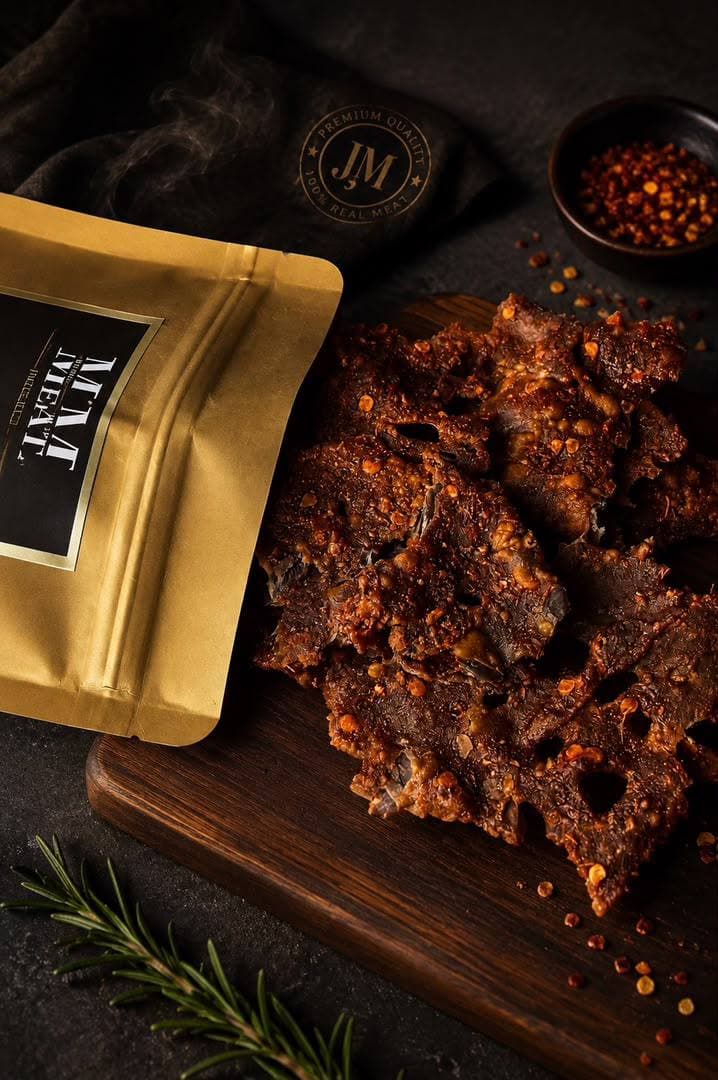
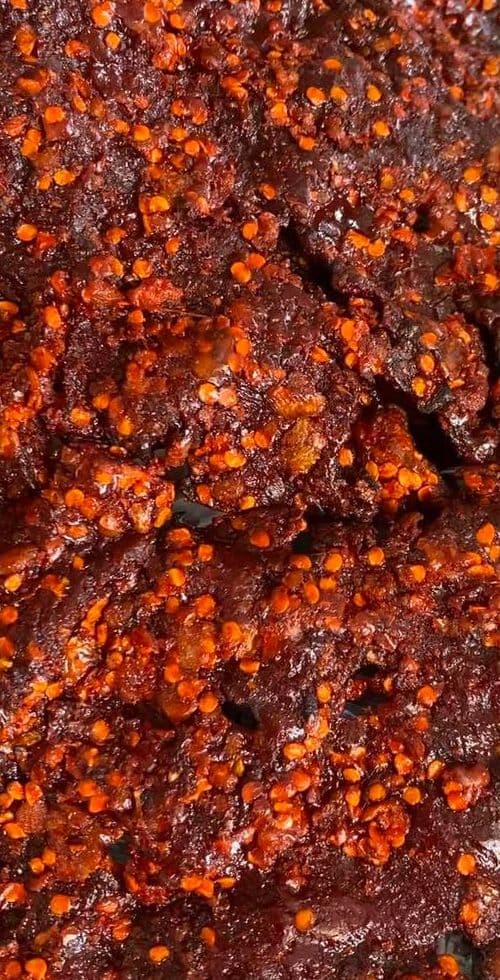
Kilishi
Beef sliced thin enough to read through. Sun-dried on open racks, painted with groundnut paste and yaji, then sent back over the fire until the edges go dark and the chili sets into the surface like grit.
It tears rather than snaps. It's salt, heat, smoke and a slow sweetness underneath, and it does not taste like anything sold in a supermarket aisle.
₦3,000
02
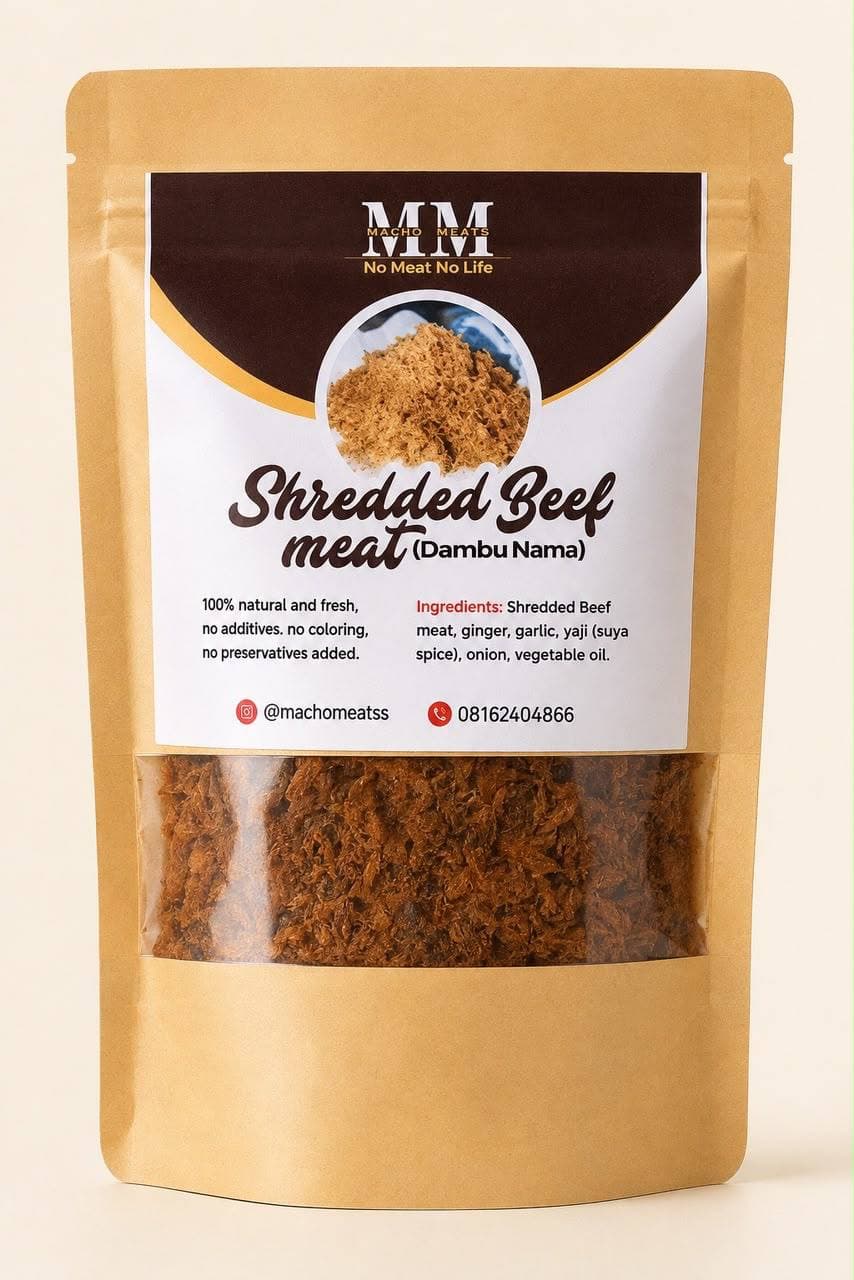
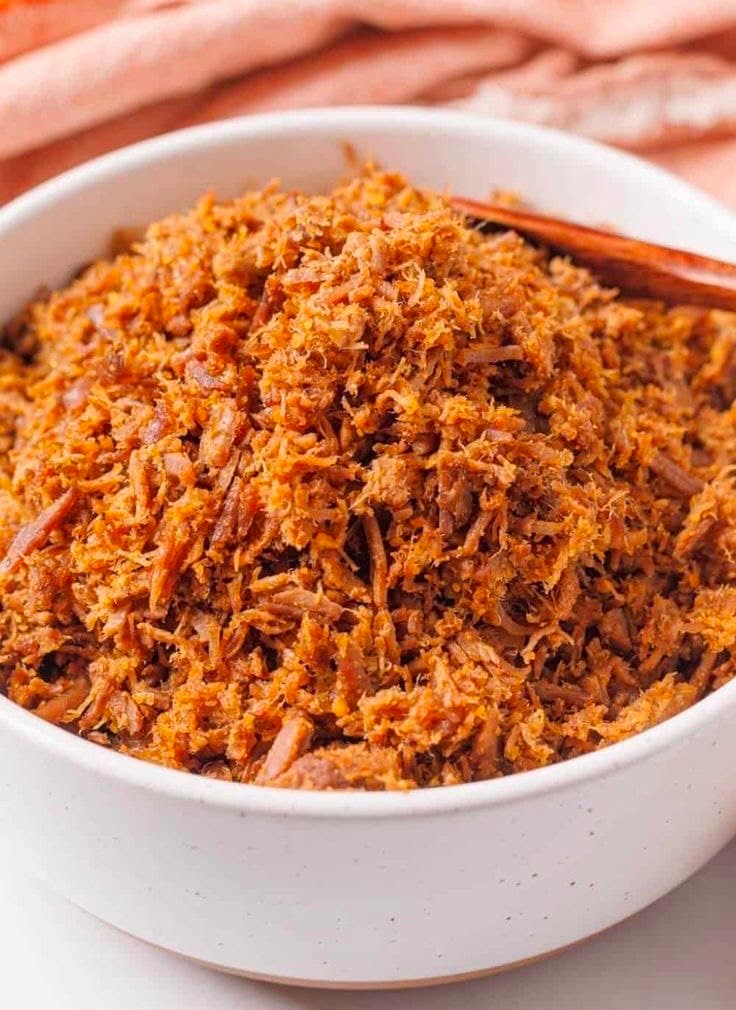
Shredded Beef — Dambu Nama
Beef cooked until it gives up, then pulled into strands fine enough to catch the light. Fried down in its own spice until every thread is dry, golden and loaded.
Over white rice. Folded into agege bread. Straight from the pouch with a spoon, standing at your kitchen counter, which is how most of it actually gets eaten.
₦1,800
Trust the process
How kilishi is made
01
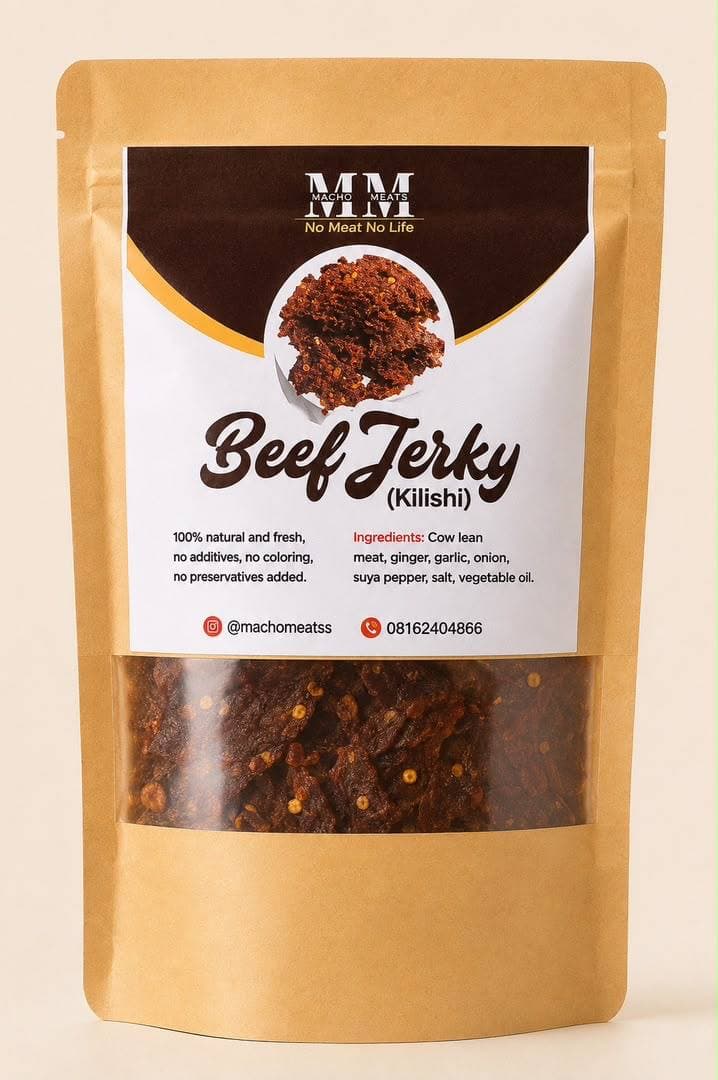
Slice
Fresh beef, cut paper-thin by hand. Thickness is the whole game; too thick and it never dries properly.
02
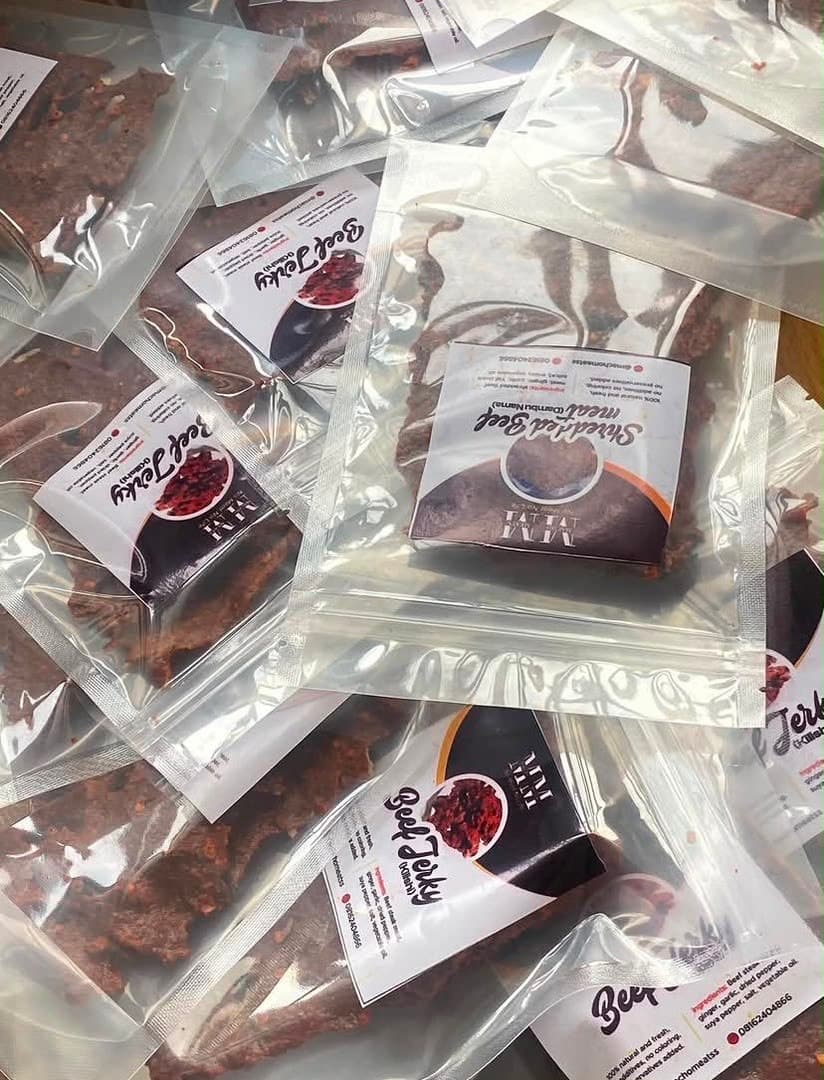
Sun-dry
Laid out on open racks until the water is gone and the flavour concentrates.
03
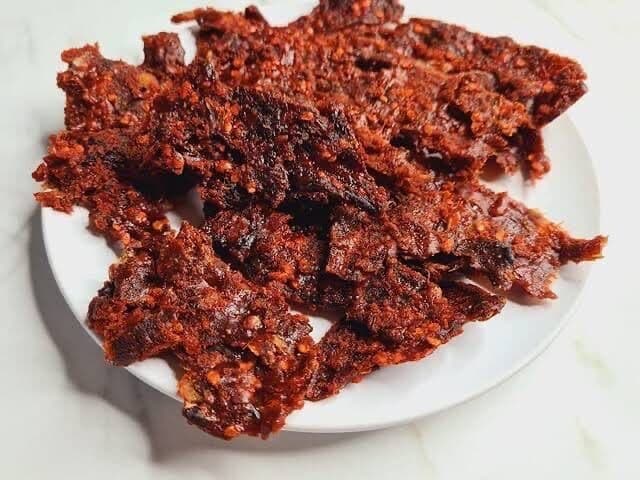
Spice
Coated in groundnut paste and yaji: ginger, garlic, onion, chili, salt.
04
Fire-roast
Back over the flame until the spice sets and the edges char. Then it cools, and it's done.
What's actually in it
Beef · Salt · Ginger · Garlic · Yaji · Onion · Vegetable Oil
No preservatives. No colouring. No additives. That's the whole list.